
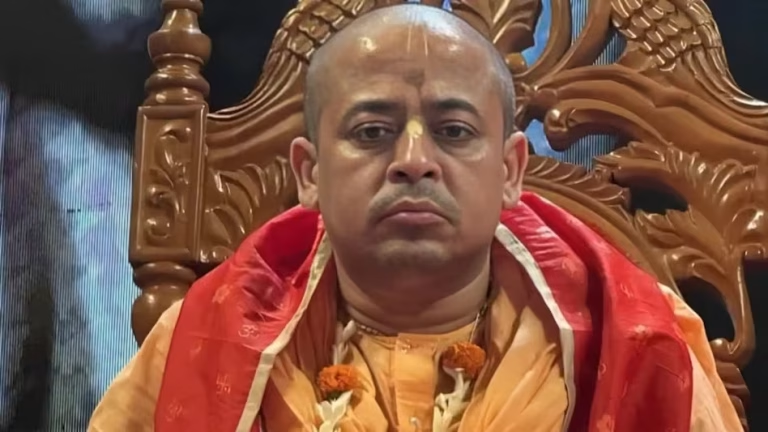
DHAKA: In a development that has stirred both national and international discourse, a court in Bangladesh recently denied bail to prominent Hindu monk Chinmoy Krishna Das, further igniting concerns over religious freedoms and justice in the country. The case has drawn significant attention from human rights organizations, faith groups, and political observers, highlighting a complex interplay of law, religion, and politics.
The Arrest and Charges
Chinmoy Krishna Das, known for his spiritual leadership and community work, was arrested earlier this month under charges that remain contested. Authorities have cited allegations ranging from sedition to violating public peace, though his supporters claim the accusations are baseless and politically motivated.
Legal experts and activists have raised questions about the evidence presented against Das, with many pointing to inconsistencies in the case. The monk’s defense argues that his detention is a targeted effort to suppress minority voices in an already fraught socio-political landscape.
Public and International Reactions
The denial of bail has sparked protests across Bangladesh, particularly among the Hindu community, which constitutes about 8% of the country’s population. Demonstrators have called for Das’s immediate release, emphasizing his contributions to social harmony and his reputation as a peace advocate.
Internationally, human rights groups like Amnesty International and Human Rights Watch have expressed concern, urging the Bangladeshi government to ensure a fair trial and uphold the rule of law. India, home to the world’s largest Hindu population, has also been closely monitoring the situation, with calls from various quarters for diplomatic intervention.
Religious Tensions and Minority Rights
This case underscores the broader challenges faced by religious minorities in Bangladesh. Despite constitutional guarantees of equality, incidents of discrimination and violence against minorities are not uncommon. Critics argue that the current political climate has exacerbated these tensions, with growing polarization and the marginalization of dissenting voices.
What’s Next?
As the case unfolds, it remains to be seen whether the legal proceedings will align with international standards of justice. For Chinmoy Krishna Das, his followers, and the broader Hindu community in Bangladesh, this is not just a legal battle but a fight for dignity and religious freedom.
The implications of this case go beyond national borders, serving as a litmus test for Bangladesh’s commitment to pluralism and human rights in an increasingly scrutinized global arena.